

Any engineer in electronics product development whether an embedded systems engineer, control engineer or product developer is likely aware of the differences between the microcontroller and the microprocessor. Although subtle in the design and implementation of any system the right choice is important as in most modern devices these are basic devices in any circuit.
To understand the differences between microprocessors and microcontrollers, it is imperative to understand their basic functioning, architecture and how they work. In essence, both the microprocessor and microcontroller are integrated circuits. However, in application, functionality and design, they both differ. The main difference between microcontrollers and microprocessors , is microprocessors constitute a central processing unit while on the other hand, a microcontroller is a self-contained unit with necessary peripherals to the chip.
Thus, in definition, a microcontroller is a miniaturized computer compacted on a single integrated chip. Typically, a microcontroller unit , MCU, will consist of one or several processor cores with other peripherals that help the user interface with the chip such as memory, serial and parallel interfaces, and other I/O peripherals.
On the other hand, a microprocessor is characterized as a computing element with the basic functionalities of a central processing unit, the CPU. Thus, in any computing device, the microprocessor acts as CPU, made up of ALU, CU and registers.
The lines between microcontrollers and microcontrollers appear so micro, but in the application, they are vastly different. At the end of this article, you should be able to tell the difference and never confuse them ever again.
What is an integrated circuit (IC)?
An integrated circuit or an IC for short is an assembled thin semiconductor substrate consisting of several millions of electronic components fabricated as a single unit. The components are both passive and active devices such as diodes, capacitors, resistors and transistors. Due to the miniaturized fabrication process the resulting circuit, is a small chip, the size of a few centimetres or millimetres.
The development of the IC and integrated circuits were heavily influenced by the invention of the transistor. Since then, integrated circuits have revolutionized the concept of fabrication on nano processes as well as the face of modern electronics and computing devices.
There are two basic designs of ICs, analogue ICs and digital ICs. As the name suggests, analogue ICs use fewer components and are used to perform simple operations such as collecting, amplifying and sending signals. Examples of analogue ICs are regulators, filters, amplifiers and oscillators.
In contrast, digital IC designs, are such that the components are allowed to receive voltages of a given range and thus operate with a binary system, on and off, or 0 and 1. The logic used in these circuits is binary circuit logic. The digital ICs are used to create computer memories such as RAM and ROM and consequently microprocessors.
An introduction to Microprocessors and Microcontrollers
Both the microprocessor and the microcontroller are significant and impactful inventions of the 20th century with all computing and basic electronics iterating and improving on these technologies. Before choosing any of the two, it is important to understand which one came first, the benefit and the shortcomings of each. So, let’s take a look.
What Is a Microprocessor
The microprocessor is the most significant invention in modern times in the world of computing and microelectronics. The microprocessor is the basic element of any computing system, also known as a CPU. It is a programmable clock-driven and register-based device that can receive instructions, and binary data, that is stored in memory, execute it and deliver output. It is important to note that microprocessors do not offer other operations such as storage, transfer, or any input or output peripherals. For this purpose, microprocessors require other supporting chips for memory, interfacing, inputs and output peripherals. The process of embedding these systems to form a larger system with the microprocessor as the CPU is the basis of computing. The system is called a microcomputer.

The CPU, microprocessor, consists of three core elements, the control unit (CU), arithmetic and logic unit (ALU) and register array:
- ALU: The ALU performs mathematical operations including addition, multiplication, division, and subtraction. Moreover, it supports logical operations like "and," "or," and so on. The actual bits and bytes of computation take place in the ALU.
- Register array: The register array is utilized by the ALU to store any temporary data needed. The register array functions much like close-coupled, quick-access flash memory for the ALU.
- Control unit: Lastly, the control unit controls the timing and control signals needed by the components inside the microprocessor as well as the flow of data into and out of the device.
The microprocessor elements can only be used once it is interfaced with other peripherals and memory.
The following list includes a variety of electronics.com/productdetail/sgmicro-sgm809xxn3tr-20982402">www.jakelectronics.com/blog/the-difference-between-a-microcontroller-and-a-microprocessor">microprocessor types:
- Intel 386, Pentium II, Pentium, Pentium Pro, Intel 486, etc. are CISCs (Complex Instruction Set Computers).
- Reduced Instruction Set Computer (RISC): Examples include the IBM RS6000, the DEC Alpha 21064, and the DEC Alpha 21164.
- Intel Architecture-64, for instance, is an example of explicitly parallel instruction computing (EPIC).
What Is a Microcontroller
A microcontroller is also a programmable device that works similarly to a microprocessor. However, a microcontroller includes a microprocessor, and CPU in its core alongside a memory, timers and counters and other I/O peripherals fabricated on a single chip. For this reason, microcontrollers are also referred to as single-chip microcomputers.
Microcontrollers are similar to microcomputers in which all the components are contained in a single chip. However, microcontrollers are designed to run at low power and perform dedicated functions such as automatic control of processes, machines and in small industrial and consumer products.
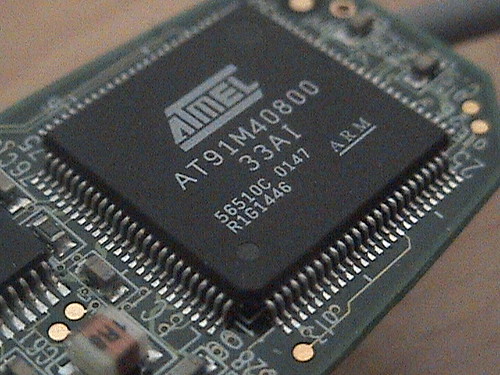
The basic elements of a microcontroller are:
- Microprocessor: The microprocessor, often known as the system's central processing unit (CPU), is a part of the microcontroller. Here, computing takes place. These microprocessor units work in the same way, but they are far less efficient than the separate microprocessors we've studied so far in this chapter.
- Memory: Program memory (ROM) and data memory (RAM) make up a microcontroller's memory. The software is kept in the ROM as sets of instructions. When the CPU is active, variables are stored in RAM, which is the memory utilized for this purpose.
- Timers and counters: The microcontroller use timers and counters for all clocking activities. Pulse-width modulation, clock control, and frequency measurements fall under this category.
- Converters: The input and output signals of the microcontroller are converted using analogue-to-digital converters (ADC) and digital-to-analogue converters (DAC), respectively.
The basic reliability and repeatability of processes using microcontrollers make it a good choice for embedded systems applications as it can be used without human interference for long periods of time.
Microcontrollers are used in various products such as toys, remote controls, cars, mobile phones and other household and consumer products.
Some examples of microcontrollers are:
- PIC Microcontroller
- MSP Microcontroller
- AVR Microcontroller
- ARM Microcontroller
- 8051 Microcontroller
What are the Key Differences Between a Microprocessor and Microcontroller?
As shown, there are a lot of similarities between the microprocessor and the microcontroller as they perform relatively similar tasks. There is also some defining difference between the microprocessor and the microcontroller.
1. Computational power
In computing elements and devices, the speed at which a device operates is very pivotal as it determines the number of operations, and tasks and the speed at which it can perform the set tasks.
In raw computing power, the microprocessors are clearly better than microcontrollers boasting clock speeds of between 1-4GHz. Thus, microprocessors can perform more tasks, more efficiently and within less time. This makes them suitable for generalized operations as they can perform complex problems simultaneously. However, the speed of the overall system designed with a microprocessor and other peripherals is dependent on the other systems and how they communicate.
On the other hand, microcontrollers have a lower clock speed of 200MHz or less. Microcontrollers are optimized to perform a similar or specific task repeatedly, basically repeating the same code or program over and over thus saving on power and less speed required. Since the microcontrollers have all the components relatively close to the same chip, they often perform better than the microprocessors despite their slow computing power for simple automation tasks.
2. Power
Microcontrollers are designed to perform at low clock speeds and consume less power. The processor used performs dedicated tasks that are always repetitive and thus requires less speed and less power than the processors that perform generalized tasks. The components used in microcontrollers are designed with specific tasks and low power consumption in mind. Microcontrollers save a lot of power and can be found to be battery-operated. This is one of the key advantages of microcontrollers over microprocessors.
Microprocessors consume a lot of power compared to microcontrollers which are more energy efficient. This results from microprocessors operating at much higher speeds and with less efficient interfaced peripherals.
3. Cost
Microprocessors offer more performance, and higher processing power and cannot operate independently of external peripherals, this drives up the cost of microprocessors. Microprocessors are also very complex as they are made to perform complex computational tasks, thus requiring more complex processes in manufacturing driving the costs high.
Given that microcontrollers are meant to perform specific tasks, the hardware used is low-powered and of limited functionality, thus costing less to manufacture. Also, all the necessary elements such as I/O and other peripherals that are needed are built into the chip making it less expensive. For this reason, microcontrollers are used for educational purposes, hobbyist projects and other small projects.
4. Size
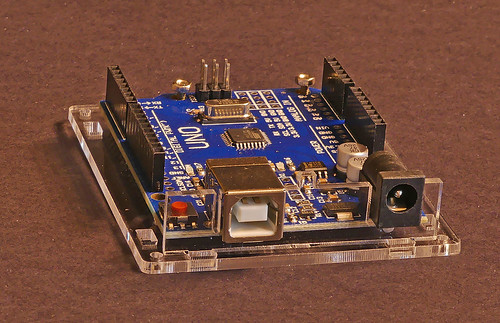
Although microprocessors are small whilst housing billions of transistors and other passive and active devices, the size is giant compared to a microcontroller. This is also bearing in mind that the housing PCB of a microcontroller is large in size to house all the external peripherals and supporting chips. Take a PC motherboard as an example.

Compared to microprocessors, microcontrollers are tiny. Microcontrollers house all the devices, elements and peripherals on a single chip, making it overall small. This makes the applications of microcontrollers vast especially in miniaturized or small devices.
5. Operating Systems
Microprocessors are designed to handle heavy computational tasks, and perform a wide array of tasks simultaneously and thus can be paired with complex operating systems that can perform general functions. Such operating systems include windows, Linux, macOS, and android operating systems. All these operating systems are resource-hogging and cannot be used on microcontrollers due to their limited speeds and resources.
On the other hand, microcontrollers do not use full Operating systems to operate and thus run their applications directly on the device firmware. This means that code written for the microcontrollers is interpreted, compiled and uploaded into the device for execution. The process of programming tasks in microcontrollers is relatively easy but can get complicated with high-level controllers.
Key Difference to Note
|
Microprocessors |
Microcontroller |
|
Microprocessors are at the heart of all computing systems. |
Microcontrollers are at the heart of embedded systems. |
|
Has just the processor with no external peripherals or memory. |
Microcontrollers have all the peripherals, memory and I/O components on a single chip |
|
Has higher clock speeds between 1-4GHz |
Has lower clock speeds of about 200MHz or less. |
|
Mainly used in personal computers and complex computing devices. |
It is used in embedded systems and lower energy consumer electronic systems such as washing machines, ovens, music players, etc. |
|
It is used for general purposes. |
It has a more specialized application. |
|
Not cost-effective. |
Highly cost-effective. |
|
High power consumption rate |
Low power consumption. |
|
Depending on the usage and the system, the circuit can be very large |
Have a very small footprint compared to microprocessors. |
Final Thoughts
The microprocessor and the microcontroller share a lot of similar functionalities as well as differ from others. They are also different ways in which computing systems are optimized around the use of a CPU, with each being optimized for a particular range of operations.
Microcontrollers are used to perform simple repeatable tasks while also being power cautious. On the other hand, microprocessors are designed to perform more complex and power-consuming tasks. The choice between the two thus is dependent on the project in mind and the considerations therein.