

The development and deployment of automation processes and robotics has been a key feature and major hit in Amazon. The goal of these technologies has been to streamline production and customer service delivery. Currently in Amazon warehouses there are over 750,000 working robots according to a report from Amazon.
Amazon, an e-commerce giant has been at the forefront of reshaping the way we shop and how we interact with online shops. To further improve on this, Amazon has been experimenting and transforming warehouse logistics and management through the deployment of robots, called Amazon Robots. These machines have not only revolutionized warehousing but also streamlined the company’s operations through high efficiency, speed and fulfilment of the e-commerce market needs.
The technology has however not gone without its hurdles. Ranging from job displacement concerns and accidents involving robots which have both led to rigorous measures by Amazon to maintain the status quo and safety of the workplace.
Over the years, Amazon has worked with and tested several robots and robotic arms such as Sparrow, Cardinal, and its Roomba-like mover robots.
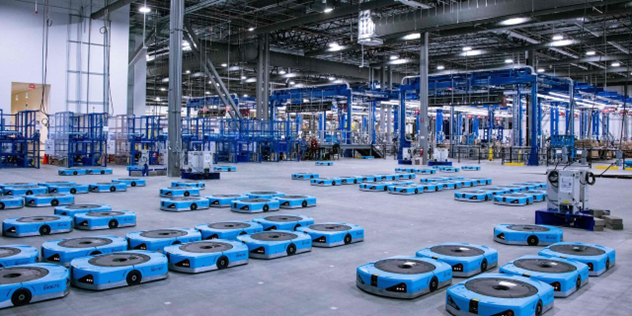
2. A fleet of amazon Kiva robots used in warehouses. They are used to carry things around the warehouse.
In 2012, Amazon started its foray into the robotics industry when it acquired Kiva Systems. The robotics company Kiva Systems has already created a fleet of automated robots to help with warehouse operations. After realising the potential of this technology, Amazon paid $775 million to acquire Kiva. After the technology was renamed Amazon Robotics, automation progressed.
Recently, Amazon has announced that it has begun testing its new human-like bipedal robot in its experimental facility in Sumner. The robot named Digit has two arms, two legs, and two square lights for eyes. It is also adorned with a blue chest. It has various degrees of freedom with its abilities to move forward and backward, turn around, and bend. The aim of these robots according to Amazon has been to help the human counterparts in streamlining processes such as recycling, packaging, moving heavy equipment and such.
3. Amazon begins testing of its humanoid robots, called Digit, to 'free up its worker for other tasks
The robotic counterparts in Amazon warehouses have come with their set of advantages and benefits, both to the company and to its employees. The robots offer speed, efficiency and accuracy to the existing processes.
Also, by automating routine tasks, Amazon can allocate its human workforce to more complex and value-added activities, such as quality control, problem-solving, and customer service. Routine and repetitive tasks such as heavy lifting and moving things around have been associated with musculoskeletal injuries. Through deliberating these tasks to robots Amazon has been able to improve safety in its warehouses for its employees.
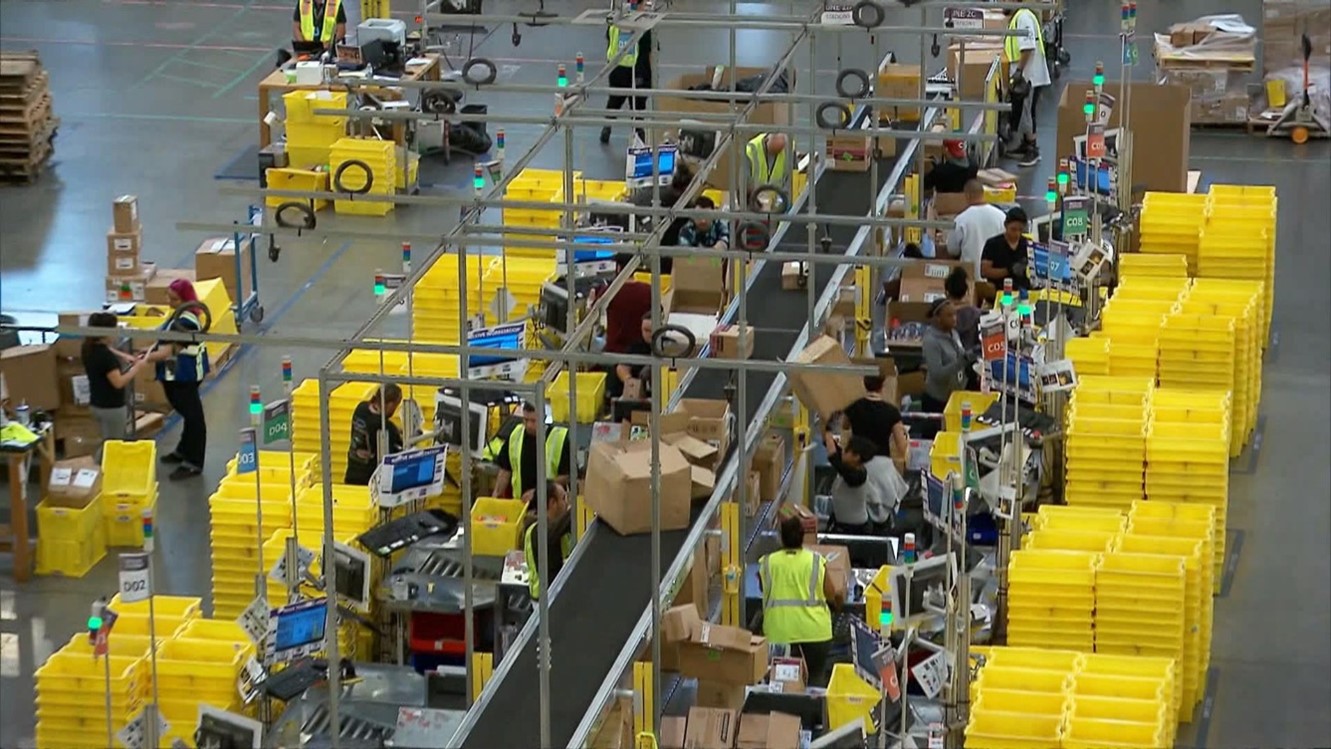
4. A standard Amazon Warehouse with workers doing all the tasks.
Although Amazon's robots offer many benefits, there has been some debate regarding them. Since there is less need for human labour in warehouses as a result of greater automation, critics have expressed worries about job displacement. In response, Amazon has emphasised the necessity of retraining and upskilling programmes for its automation-affected staff.
Furthermore, incidents involving robots have occurred, emphasising the necessity for strict safety protocols and continuous technological advancements.
Regardless of these concerns raising brows, Brady, a chief technologist at Amazon Robotics has claimed that people are irreplaceable and the Amazon robots are not there to replace any of Amazon's employees but to work cohesively for a streamlined workflow.
Onstage, according to The Guardian, Brady said, “Collaborative robotics involves people. How can we have people be the stars, the spotlight, the centre of the show when it comes to the jobs that we have to do?
“When we do our job really, really well, our robotic systems just kind of blend into the background to become ubiquitous. You don’t talk about your dishwasher too much in your kitchen. It’s an amazing robot. It’s such a great robot that I don’t even call it a robot.”
So, there is yet a place for the workers in the Amazon Warehouses. As technology continues to advance, Amazon's robotic workforce is likely to play an even more significant role in shaping the future of e-commerce and logistics. It remains to be seen how other companies will respond to this automation trend and what implications it may have for the broader job market.